
Drought: the Story of this Year's Nectar Flow in Charlotte, NC


If you’ve talked to any beekeeper in the Charlotte area this spring, you’ve probably heard the same thing:
“This year just feels off.”
And unfortunately, it is.
Here in the Charlotte, NC region, the 2026 nectar flow has been heavily impacted by ongoing drought conditions. While we still saw trees bloom and flowers open as normal, nectar production has been far below what many beekeepers expected during what is usually our strongest honey-producing season of the year.
Why Rain Matters for Honey Production
Many people assume bees make honey simply because flowers are blooming. But blooming alone does not guarantee nectar and thus honey production.
Plants need adequate soil moisture in order to produce nectar. During drought conditions, trees and flowering plants go into survival mode. Instead of putting energy into producing nectar to attract pollinators, they conserve water and resources.
That means:
Flowers may bloom normally
Bees may still visit those blooms
But there may be very little nectar available
For beekeepers, this often looks like:
Colonies flying heavily but gaining little weight
Honey supers remaining unusually light
Bees consuming stored honey instead of adding to it
Reduced surplus honey production overall
Tulip Poplar Was Especially Affected in Charlotte, NC
One of the biggest nectar sources for bees in Charlotte and throughout the North Carolina Piedmont is the tulip poplar tree. In a normal year, tulip poplar can produce an enormous amount of nectar and is responsible for much of our spring wildflower honey crop.
This year, however, many tulip poplars bloomed during extremely dry conditions. While the blooms were visually impressive, nectar secretion appeared significantly reduced in many areas around Charlotte, Huntersville, Cornelius, Davidson, Mooresville, and surrounding communities.
Even strong colonies struggled to capitalize on what is usually the peak of the spring honey flow.
Heat Also Plays a Role
High temperatures can make drought conditions even worse for nectar production.
When temperatures climb into the upper 80s and 90s for extended periods without rainfall:
Nectar can dry up quickly
Clover stops producing as heavily
Plants become stressed
Bloom periods shorten
Bees may still forage aggressively during these periods, but they often burn more energy searching for nectar than they actually bring back to the hive.
Like Nothing I've Seen Before
While I've definitely seen drier conditions during the nectar flow inn my almost decade of beekeeping, I've never seen anything like this year before. Mecklenburg County has been in an Exceptional Drought for pretty much the entire nectar flow while North Carolina as a whole has had it's driest year on record...EVER!!!
There are several hives that I started this year from splits that haven't put on adequate foods stores not only for winter survival but summer survival as well. If they don't get some emergency feed on them soon they probably won't make it till August, especially when considering we are expected to have a few extra weeks of robbing.
This is what I'd like to caution many new beekeepers about. If you bought a nucleus colony from us or even just caught a swarm, this hive will need some help! No matter how strong they are or how good their queen is, if they don't have enough food this summer they're gonna be toast and no I don't mean from the heat.
Why Local Honey May Be More Limited This Year
Because of the reduced nectar flow, many Charlotte-area beekeepers are expecting:
Smaller honey harvests
Less raw honey available for sale
Increased demand for local honey
Faster sellouts during summer and fall
This is especially true for:
raw wildflower honey
unfiltered honey
spring honey
small-batch local honey
Each season’s honey crop is completely dependent on weather conditions, bloom timing, and rainfall totals.
Supporting Local Beekeepers in Charlotte, NC
Years like this are a reminder that local honey is deeply connected to the environment. Every jar reflects the season the bees experienced:
Rainfall
Temperature
Bloom conditions
Soil moisture
Regional forage availability
Supporting local beekeepers helps sustain:
Pollinator education
Swarm rescue services
Honeybee removals
Local agriculture
Healthy pollinator populations throughout North Carolina
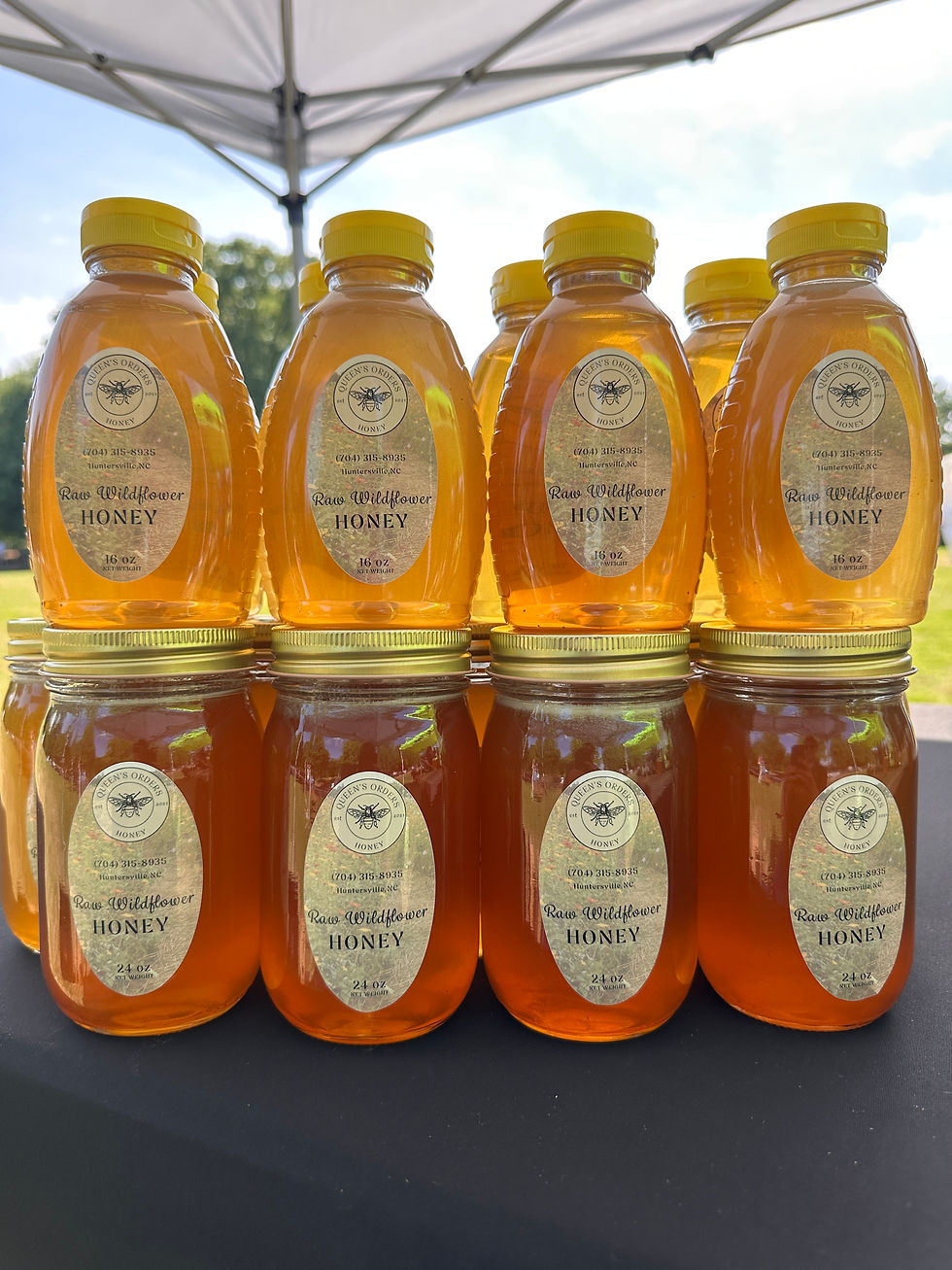
At Queen’s Orders Honey, we produce raw local honey in Charlotte, NC using treatment-conscious beekeeping practices focused on healthy colonies and sustainable honey production.
If you’re looking for:
local honey in Charlotte NC
raw honey near Huntersville
North Carolina wildflower honey
honey from local beekeepers
unfiltered honey near Lake Norman
…we’d love to help connect you with this season’s harvest while supplies last!


Comments